Be yourself; Everyone else is already taken.
— Oscar Wilde.
This is the first post on my new blog. I’m just getting this new blog going, so stay tuned for more. Subscribe below to get notified when I post new updates.

"I think that horror fiction is one of the ways to approach these problems of death." – Clive Barker
Be yourself; Everyone else is already taken.
— Oscar Wilde.
This is the first post on my new blog. I’m just getting this new blog going, so stay tuned for more. Subscribe below to get notified when I post new updates.
Hello, dear reader, and welcome back to another instalment of Horror Fiction Addiction! In this final post, I will be wrapping up the series by exploring: what horror is, why we are drawn to it and its purpose.
So what is horror at its core? According to the Penguin Book of Horror Stories, “The word horror derives from Latin horrere, ‘to make the hair stand on end, tremble, shudder.”[1] So, therefore, the subject matter is required to evoke emotion in us. But because the genre is so broad, it is impossible for the genre to be categorised under a single definition. Philosopher and sociologist, Tzvetan Todorov, suggested a way to classify the genre through its categories and subgenres: the uncanny, the marvellous and the fantastic.
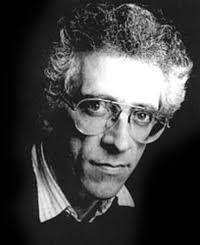
The uncanny – “The end of the story contains elements of supernatural, events that seem to be unreal, impossible…or events that follow the laws of rational but are incredible, disturbing…or unique.”
The marvellous – “…seemingly irrational and incomprehensible phenomena can be explained only by accepting the second layer of reality – the supernatural while the story lasts…“the new laws of nature”. These include stories that feature vampires, werewolves and the living dead.
The fantastic – “Fantastic horror does not allow us clear explanations of the irrational; it offers us several alternatives. The viewer/reader can decide whether they will explain the phenomenon as the existence of the paranormal or as a hallucination of the main protagonist. The fantastic horror raises doubts and hesitation between the natural and supernatural alternative, which the recipient may (or may not) share with the character.”
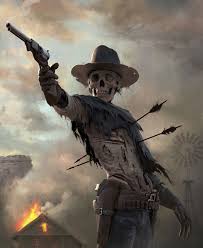
Other subcategories include: rural, cosmic, apocalyptic, crime, erotic, occult, psychological, visceral and surreal.[2] But there are so many other contemporary subgenres of horror, such as Western Horror/Weird West made popular by writers such as Cormac McCarthy and Richard Layman.
So why are we so drawn to horror? The enjoyment some people get from fear is likely not from fear itself but from “the physical and emotional release that follows scary situations,”[3] without actually having to put yourself in those dangerous situations. “But when the extreme sense of excitement wears off, it is replaced by an equally intense sense of relief, and those positive feelings are stronger than they would have been otherwise. A sense of mastery can also come from enduring a frightening situation and emerging triumphant.”[4] It acts as a ‘safety valve’, in which the exploration of the taboo in a safe environment releases built-up pressure. The hormones, such as adrenaline, which are released, as a result, is linked to a phenomenon known as “excitation transfer.” When scared, the body undergoes spikes in heart rate, breathing rate and muscle tension, among other involuntary responses. It taps into our natural, primal fight or flight responses and reassures us when the story ends that our lives are better than we thought when we started reading.

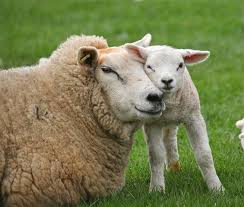
Therefore the purpose of horror is to explore our primal instincts in a civilised, law-abiding way. Almost as a tactic to keep humans ‘inline’ with civilised laws and behaviours. To release the tension caused by societal expectations and pressures. In some ways to demonstrate the dark side of the human psyche and act as a warning or a guide of what not to do. For example, in the short story, ‘The Shepherd’s Business’ by Stephen Gallagher, the sordid side of human nature is shown when a farmer cuts off his dead baby’s skin and places it over a different baby. This striking and harrowing visual image is so deeply upsetting and disturbing. But the most unsettling thing about this is that he fails to recognise that doing this to a human baby is depraved and disgusting, despite having good intentions. “In the few words he could manage John Petrie had told me how when a newborn lamb is rejected by its mother it can be given to a ewe who’s own lamb has died at birth. But first the shepherd must skin the dead lamb and pull its pelt over the living one. Then the new mother might accept it as her own. If the sheep understood the horror would be overwhelming… But screaming started from within the house, just as I was reaching the threshold.”[5]
In summary, I hope you have enjoyed this short exploration into the world of horror literature, dear reader. We’ve covered my personal experiences with the genre, we’ve looked at tips from the finest horror writers thee have been, we’ve delved into key horror locations and settings, and now we have covered the very nature of the genre. My blog series may be over, but Horror Fiction Addiction will always live on inside those that invite it into their souls. TTFN J
Bibliography
Cuddon, J.A. ‘The Penguin Book of Horror Stories’ (Godfrey Cave Associates Ltd, London, 1984), pg. 12
DNEWS, ‘Why is Fear Fun?’ published on Seeker.com in 2012 https://www.seeker.com/why-is-fear-fun-1766022662.html
Date accessed: 16/04/2020
Gallagher, S. ‘Shepherd’s Business’ IN: Morris, M, New Fears, (Titan Books, London, 2017), pg. 49
Todorov, T. (1973) The Fantastic: A Structural Approach to a Literary Concept. IN: Strinati, Dominic. (2000). An Introduction to Popular Culture. (Routledge, London), pg.83
Footnotes
[1] Cuddon, J. A, ‘The Penguin Book of Horror Stories’ pg. 12
[2] Todorov, T. (1973) The Fantastic: A Structural Approach to a Literary Concept. IN: Strinati, Dominic. (2000). An Introduction to Popular Culture. (Routledge, London), pg.83
[3] DNEWS ‘Why is Fear Fun?’ published on Seeker.com in 2012 https://www.seeker.com/why-is-fear-fun-1766022662.html
[4] DNEWS ‘Why is Fear Fun?’ published on Seeker.com 2012 https://www.seeker.com/why-is-fear-fun-1766022662.html
[5] Gallagher, S. ‘Shepherd’s Business’ IN: Morris, M, New Fears, (Titan Books, London, 2017) pg. 49
Hello, dear reader, and welcome back to another instalment of Horror Fiction Addiction!
In this post, I will explore the use, and importance of, location in horror fiction.
Location and setting in horror fiction are paramount because without a place for your story to occur, your characters would just be floating in… well, space. And that’s only effective if that’s what you intend!
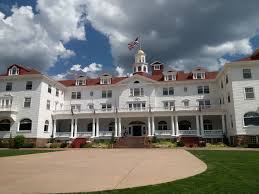
Let’s start with the most common location used in popular horror fiction, the haunted house. “In the case of these stories, the space itself IS the story. Think of the Overlook Hotel in The Shining, or Hill House in The Haunting.”[1] One reason as to why houses are such good locations for horror is that they are familiar to us, as most of us live in houses. Homes are safe-havens, where we come to relax and unwind, to shut out the atrocities of the world. So what if a threat is introduced to our safe-spaces? It makes it all the more terrifying. Sigmund Freud’s theory of ‘The Uncanny’ presents the notion that uncanny feelings are aroused when something familiar, such as a house, is presented as unfamiliar when there’s a great big monster with big pointy teeth in that house. “…the “uncanny” is that class of the terrifying which leads back to something long known to us, once very familiar.”[2] The idea that anyone (or anything) who wanted to get in, they theoretically could. This location has been used right back in Edgar Allen Poe’s day, and it only gets more intense as the years float by. Our houses are supposedly becoming safer with many technological devices, so the notion of someone being able to get in is frightening in itself, not to mention what they might do once they’re inside.
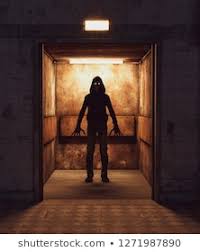
Now, to more unconventional settings. Now, the elevator is often part of the house setting, it can be found in stories such as The Shining with significant modern buildings, but it isn’t usually the sole setting. In the ‘Abduction Door’ by Christopher Golden, Golden has taken a space which can be quite unexciting and mundane for some or terrifying for others, due to the small space and the possibility of being stuck. Still, he has added a supernatural, and quite terrifying, element to it. When there is a child present in the lift, a door leading to a fleshy, human-eating bug habitat appears, and the child is snatched from their parent. The imagery of this world, “below the honeycomb of stolen children is another chamber, where horrible, spindly figures move back and forth to wide-mouthed ovens whose fire – when their doors are opened – turns the honeycomb prison a furious red.”[3] Isn’t as terrifying as the prospect of the burdening ethical dilemma the protagonist has to make. To save his child, he accidentally imprisons himself. To escape, he has to snatch 13 other children, or he is left in a corridor to starve with the other parents. What would you do?
I hope you enjoyed this horror and location blog post! Stay tuned for the fourth and final post, coming to you on the 3rd of April! Stay away from lifts!
References
[1] The Importance of Location in Horror, Luna Station Quarterly
[2] Sigmund Freud, ‘The Uncanny’, Art and Literature Vol. 14 (Penguin, 1990) pg. 340
[3] Golden, C, ‘The Abduction Door’, Morris, M, New Fears, (Titan Books, London, 2017) pg. 361
Bibliography
Golden, C, ‘The Abduction Door’, Morris, M, New Fears, (Titan Books, London, 2017)
Freud, S, ‘The Uncanny’, Art and Literature Vol. 14 (Penguin, 1990)
Luna Station Quarterly, The Importance of Location in Horror,
Date accessed: 17/03/20
Hello and welcome back to another Horror Fiction Addiction blog post!
In this instalment, I will explore the techniques horror writers use to ingrain a sense of fear in their readers. Unlike filmmakers, writers can’t rely on the use of startling audio or visual effects, so how do they do it?
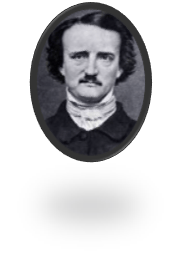
Let’s start by going back to the 19th century. One of the undisputed masters of the genre, Edgar Allen Poe, wrote in a four-step formula noted by David R Saliba from the University of Washington[1].
Firstly, “Poe isolates the reader by capturing his attention for the duration of the tale.”
A metaphorical ‘choke hold’ – if you will.
Then he stuns the reader’s sensibilities. “He exploits the reader’s willing suspension of disbelief to the point of confusion by presenting him with… incredible information in an almost convincing manner.”
Next comes the victimisation of the reader’s emotions. “Inevitably, the narrator makes a strong appeal to the reader’s sympathy and empathy, and the reader begins to respond privately… Whatever anguish or despair the narrator suffers in the tale, the reader also suffers.” [2]
Lastly, and one of the most effective horror techniques is the premature burial of the reader’s reason. “Since Poe does not intend that his reader ever escape the effect of his fiction, he provides no resolution – no real explanation for the series of events presented in the tale- and thereby buries the reader alive.”
The reader is left with the knowledge that cannot be explained away or resolved satisfactorily. An example is in ‘The Tell-Tale Heart’ where he leaves the end on a climax, the confession of his crime. “Villains!” I shrieked, “dissemble no more! I admit the deed!—tear up the planks! here, here!—It is the beating of his hideous heart!” [3] The reader is left suspended in the action and yearns for a resolution. The reader is left with questions or may become fearful, as good horror that ‘gets under your skin’ never has a happy ending. “The horror story that ultimately ends with a triumphant return of the status quo isn’t doing its job.” [4]
And while aspects of Poe’s formula still ring true today, he was writing 200 years ago. Modern audiences experience horror in the media almost daily, which in turn means that it takes a lot more for people to react to stimuli emotionally, they have become desensitised. According to the American Psychological Association, “Several studies have shown that in the long run, habitual exposure to media violence may reduce anxious arousal in response to depictions of violence. Research has found that the more time individuals spent watching violent media depictions, the less emotionally responsive they became to violent stimuli.”
So what do we have to do to get the blood curdling in 21st-century audiences? We need to appeal to 21st-century fears. “Today’s horror novels are almost exclusively set in modern times. Why? 1. Because readers like to identify with a world they know and its everyday characters. 2. Because real-life horror is far more terrifying…” [5]
You must suspend disbelief to engage with a text about an alien invasion successfully, as it is unlikely to occur, but a text which focusses on the perils of advanced technology can make a reader far more fearful, as it can be a real-life threat to humanity.
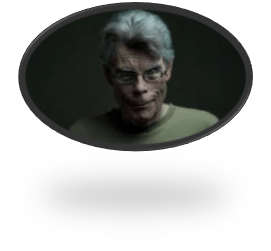
A writer a bit younger than Edgar Allan Poe, but much more successful, is the reigning king of horror, Stephen King. In his book Danse Macabre, where he writes about writing, he has a triage system formula for creating successful horror. “I recognise terror as the finest emotion…and so I will try to terrorise the reader. But if I find I cannot terrify him/her, I will try to horrify; and if I find I cannot horrify, I’ll go for the gross-out. I’m not proud.” [6]
In Katheryn Ptacek’s, ‘Dollies’, the ‘gross-out’ and ‘horrify’ quotas are hit effectively. This short story is also an example of how modern horror is often focussed on events and situations that could and do happen. The narrator/protagonist is so emotionally removed from the awful things that happen to her, (e.g being raped, giving birth, killing her baby) the horror is created from her lack of humanity. Notably, one of the last sentences of the story is the most horrifying to me. “I watched for her chest to rise and fall, and when it no longer did, I bent down and gave her a kiss on the top of her head, and then I got up and crossed to the closet and put her on the shelf beside the other Elizabeths.” [7] The most disturbing part of this is that this image isn’t impossible to replicate, but legal laws and moral rules are in place to protect people; it is the exploration of the break-down of those laws and regulations which make excellent modern horror.
I hope you enjoyed my snapshot into the inner-workings of horror writers and their processes! Stay tuned for the next installment which will be Horror and Location!
Word Count: 530 (without quotes) 854 (with quotes)
Footnotes
[1] David R Saliba, A Psychology of Fear (Washington dc: University press of America, 1980) pg.17
[2] David R Saliba, A Psychology of Fear (Washington dc: University press of America, 1980) pg.17-18
[3] Edgar Allan Poe, The Fall of the House of Usher and Other Writings, ‘The Tale Tell Heart’ (Penguin, London, 2003)
[4] Paul Tremblay, ‘The H Word: The Politics of Horror’ (Boston, Nightmare Magazine, 2015) http://www.nightmare-magazine.com/nonfiction/the-h-word-the-politics-of-horror/#end18
[5] Guy N. Smith, Writing Horror Fiction (A & C Black, London, 1996) pg.13
[6] Stephen King, Danse Macabre (Macdonald Futura, Great Britain, 1981) pg.40
[7] Mark Morris, New Fears, Katheryn Ptacek, ‘Dollies’ (Titan Books, London, 2017) pg.348
Bibliography
Allan Poe, Edgar, The Fall of the House of Usher and Other Writings, ‘The Tale Tell Heart’ (Penguin, London, 2003)
King, Stephen, Danse Macabre (Macdonald Futura, Great Britain, 1981)
Krahé, Barbara, ‘Desensitization to Media Violence: Links With Habitual Media Violence Exposure, Aggressive Cognitions, and Aggressive Behavior’ (University of Potsdam, Germany, 2011)
https://www.ncbi.nlm.nih.gov/pmc/articles/PMC4522002/
Date Accessed: 04/03/2020
Morris, Mark, Ptacek, Katheryn, New Fears, ‘Dollies’ (Titan Books, London, 2017) pg.348
Saliba, David R, A Psychology of Fear (Washington dc: University press of America, 1980) pg.17-18
Smith, Guy N, Writing Horror Fiction (A & C Black, London, 1996) pg.13
Tremblay, Paul, ‘The H Word: The Politics of Horror’ (Boston, Nightmare Magazine, 2015)
Date Accessed: 04/03/2020
Hello, dear Reader, and welcome to my first Horror Fiction Addiction blog post!
In this instalment, I will be introducing you to my personal experiences with the genre and my fears and phobias.
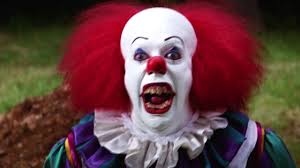
Childhood is always a good place to begin when thinking about fears and phobias because most of them have stemmed from that point in my life. I once refused to go into a village hall where my friend was having a party as there was a clown in the car park, causing me to cling to my mother’s leg in a tear-filled tantrum. My love of watching Stephen King films hasn’t helped this fear of clowns; I have to say. Tim Curry’s Pennywise is simultaneously excellent and easily the most terrifying thing I have ever seen.
The European Journal of Paediatrics reinforce this in their 2017 study by stating, “[The] Fear of clowns is a phenomenon known for more than several decades and related to the increased use of clowns as negative characters in horror movies and TV shows.”[1] And when the killer clown phenomenon occurred in 2016, the supposed ‘irrational fear’ was finally embodied in real life, making it not so irrational. I was 16 years old at this point and, to put it mildly, I was not happy about it.

The next fear is more irrational than the others, but I can’t stand any item that is filled with tiny plastic beans. Every time I touch a travel neck pillow, I get a physical sensation going up my arms and chest, and it makes me feel sick. I have no idea why I get this, but it may be linked to the time I lost my favourite panda Beanie Baby when I was younger. She was returned to me, but I eventually discovered that she wasn’t the original, a thought I still can’t bear. (Pun intended!) In a study done on texture and emotion by scientists, Iosifyan and Korolkova, they found that “people associate distinct emotions with textures while touching them.”
“Additionally, we explored whether individual differences in participants’ levels of alexithymia are related to the intensity of emotions…Alexithymia is a trait related to difficulties in identifying, describing and communicating emotions to others…Textures associated with each of the basic emotions were identified. The study also revealed that a higher alexithymia level corresponds to a higher intensity of associations between textures and the emotions of disgust, anger and sadness.”[2]
It’s nice to know that this may not be all in my head!
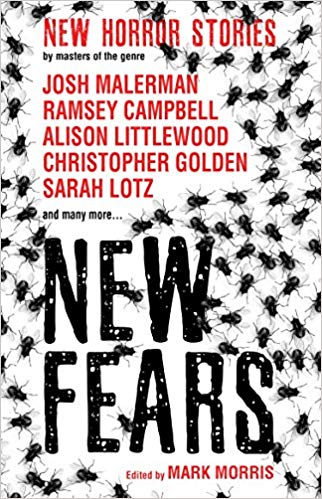
Recently I have delved into a few short stories from a collection of texts called New Fears Edited by Mark Morris[3]. One of my favourites is ‘The Embarrassment of Dead Grandmothers’ by Sarah Lotz.[4] It combined British humour with the dark nature of humankind, and I found this very effective and inspirational for some work I may wish to produce in the future. It wasn’t overly scary, but it had dark undertones in amongst humorous moments, and this hybrid left me with chills down my spine, but a smile on my face.
To my shame, aside from being forced to read gothic texts such as Dracula, The Woman in Black, Frankenstein and The Tale Tell Heart (which were all a pleasure!) I haven’t read much horror on my own. I have bought a handful of texts from the wondrous minds of Stephen King and Shirley Jackson, but they sit glumly on my dusty bookshelf along with the other 50 million books I promised myself I’d read.
But come along with me on this journey, dear reader, and together we can eventually share a Horror Fiction addiction! Keep your eyes peeled (I’ve always thought that was a horrific image) for the next instalment!
Word Count:
(Without quotes) 515 words – (With quotes) 677 words
Bibliography
Iosifyan, M., Korolkova, O., – Consciousness and Cognition, Volume 71, May 2019, Pages 79-8
https://www.sciencedirect.com/science/article/abs/pii/S1053810018304720
Date accessed: 04/02/2020
Meiri, N., Schnapp, Z., Ankri, A. et al. – European Journal of Paediatrics (2017) 176: 269. https://doi.org/10.1007/s00431-016-2826-3
Date accessed: 04/02/2020
Morris, M, – New Fears, (Titan Books, London, 2017)
Lotz, S., Morris, M – New Fears. ‘The Embarrassment of Dead Grandmothers’ pg. 243-250 (Titan Books, London, 2017)
[1] Meiri, N., Schnapp, Z., Ankri, A. et al. European Journal of Paediatrics (2017) 176: 269. https://doi.org/10.1007/s00431-016-2826-3
[2] Iosifyan, M., Korolkova, O., Consciousness and Cognition, Volume 71, May 2019, Pages 79-8
https://www.sciencedirect.com/science/article/abs/pii/S1053810018304720
[3] Morris, M, New Fears, (Titan Books, London, 2017)
[4] Lotz, S., Morris, M New Fears. ‘The Embarrassment of Dead Grandmothers’ (Titan Books, London, 2017)
This is an example post, originally published as part of Blogging University. Enroll in one of our ten programs, and start your blog right.
You’re going to publish a post today. Don’t worry about how your blog looks. Don’t worry if you haven’t given it a name yet, or you’re feeling overwhelmed. Just click the “New Post” button, and tell us why you’re here.
Why do this?
The post can be short or long, a personal intro to your life or a bloggy mission statement, a manifesto for the future or a simple outline of your the types of things you hope to publish.
To help you get started, here are a few questions:
You’re not locked into any of this; one of the wonderful things about blogs is how they constantly evolve as we learn, grow, and interact with one another — but it’s good to know where and why you started, and articulating your goals may just give you a few other post ideas.
Can’t think how to get started? Just write the first thing that pops into your head. Anne Lamott, author of a book on writing we love, says that you need to give yourself permission to write a “crappy first draft”. Anne makes a great point — just start writing, and worry about editing it later.
When you’re ready to publish, give your post three to five tags that describe your blog’s focus — writing, photography, fiction, parenting, food, cars, movies, sports, whatever. These tags will help others who care about your topics find you in the Reader. Make sure one of the tags is “zerotohero,” so other new bloggers can find you, too.
Have a WordPress.com account? Log in now.

