
Hello, dear Reader, and welcome to my first Horror Fiction Addiction blog post!
In this instalment, I will be introducing you to my personal experiences with the genre and my fears and phobias.
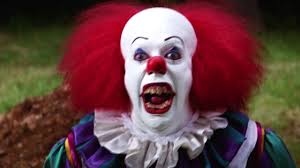
Childhood is always a good place to begin when thinking about fears and phobias because most of them have stemmed from that point in my life. I once refused to go into a village hall where my friend was having a party as there was a clown in the car park, causing me to cling to my mother’s leg in a tear-filled tantrum. My love of watching Stephen King films hasn’t helped this fear of clowns; I have to say. Tim Curry’s Pennywise is simultaneously excellent and easily the most terrifying thing I have ever seen.
The European Journal of Paediatrics reinforce this in their 2017 study by stating, “[The] Fear of clowns is a phenomenon known for more than several decades and related to the increased use of clowns as negative characters in horror movies and TV shows.”[1] And when the killer clown phenomenon occurred in 2016, the supposed ‘irrational fear’ was finally embodied in real life, making it not so irrational. I was 16 years old at this point and, to put it mildly, I was not happy about it.

The next fear is more irrational than the others, but I can’t stand any item that is filled with tiny plastic beans. Every time I touch a travel neck pillow, I get a physical sensation going up my arms and chest, and it makes me feel sick. I have no idea why I get this, but it may be linked to the time I lost my favourite panda Beanie Baby when I was younger. She was returned to me, but I eventually discovered that she wasn’t the original, a thought I still can’t bear. (Pun intended!) In a study done on texture and emotion by scientists, Iosifyan and Korolkova, they found that “people associate distinct emotions with textures while touching them.”
“Additionally, we explored whether individual differences in participants’ levels of alexithymia are related to the intensity of emotions…Alexithymia is a trait related to difficulties in identifying, describing and communicating emotions to others…Textures associated with each of the basic emotions were identified. The study also revealed that a higher alexithymia level corresponds to a higher intensity of associations between textures and the emotions of disgust, anger and sadness.”[2]
It’s nice to know that this may not be all in my head!
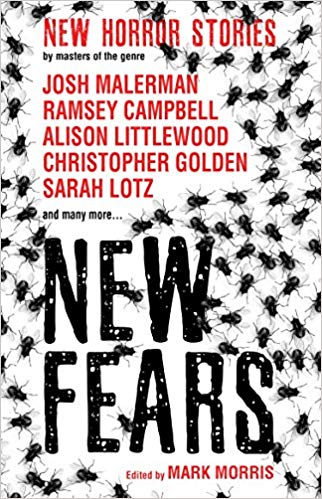
Recently I have delved into a few short stories from a collection of texts called New Fears Edited by Mark Morris[3]. One of my favourites is ‘The Embarrassment of Dead Grandmothers’ by Sarah Lotz.[4] It combined British humour with the dark nature of humankind, and I found this very effective and inspirational for some work I may wish to produce in the future. It wasn’t overly scary, but it had dark undertones in amongst humorous moments, and this hybrid left me with chills down my spine, but a smile on my face.
To my shame, aside from being forced to read gothic texts such as Dracula, The Woman in Black, Frankenstein and The Tale Tell Heart (which were all a pleasure!) I haven’t read much horror on my own. I have bought a handful of texts from the wondrous minds of Stephen King and Shirley Jackson, but they sit glumly on my dusty bookshelf along with the other 50 million books I promised myself I’d read.
But come along with me on this journey, dear reader, and together we can eventually share a Horror Fiction addiction! Keep your eyes peeled (I’ve always thought that was a horrific image) for the next instalment!
Word Count:
(Without quotes) 515 words – (With quotes) 677 words
Bibliography
Iosifyan, M., Korolkova, O., – Consciousness and Cognition, Volume 71, May 2019, Pages 79-8
https://www.sciencedirect.com/science/article/abs/pii/S1053810018304720
Date accessed: 04/02/2020
Meiri, N., Schnapp, Z., Ankri, A. et al. – European Journal of Paediatrics (2017) 176: 269. https://doi.org/10.1007/s00431-016-2826-3
Date accessed: 04/02/2020
Morris, M, – New Fears, (Titan Books, London, 2017)
Lotz, S., Morris, M – New Fears. ‘The Embarrassment of Dead Grandmothers’ pg. 243-250 (Titan Books, London, 2017)
[1] Meiri, N., Schnapp, Z., Ankri, A. et al. European Journal of Paediatrics (2017) 176: 269. https://doi.org/10.1007/s00431-016-2826-3
[2] Iosifyan, M., Korolkova, O., Consciousness and Cognition, Volume 71, May 2019, Pages 79-8
https://www.sciencedirect.com/science/article/abs/pii/S1053810018304720
[3] Morris, M, New Fears, (Titan Books, London, 2017)
[4] Lotz, S., Morris, M New Fears. ‘The Embarrassment of Dead Grandmothers’ (Titan Books, London, 2017)

