
Hello and welcome back to another Horror Fiction Addiction blog post!
In this instalment, I will explore the techniques horror writers use to ingrain a sense of fear in their readers. Unlike filmmakers, writers can’t rely on the use of startling audio or visual effects, so how do they do it?
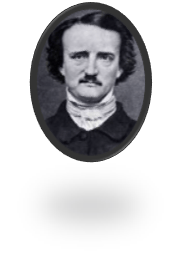
© Britannica.com
Let’s start by going back to the 19th century. One of the undisputed masters of the genre, Edgar Allen Poe, wrote in a four-step formula noted by David R Saliba from the University of Washington[1].
Firstly, “Poe isolates the reader by capturing his attention for the duration of the tale.”
A metaphorical ‘choke hold’ – if you will.
Then he stuns the reader’s sensibilities. “He exploits the reader’s willing suspension of disbelief to the point of confusion by presenting him with… incredible information in an almost convincing manner.”
Next comes the victimisation of the reader’s emotions. “Inevitably, the narrator makes a strong appeal to the reader’s sympathy and empathy, and the reader begins to respond privately… Whatever anguish or despair the narrator suffers in the tale, the reader also suffers.” [2]
Lastly, and one of the most effective horror techniques is the premature burial of the reader’s reason. “Since Poe does not intend that his reader ever escape the effect of his fiction, he provides no resolution – no real explanation for the series of events presented in the tale- and thereby buries the reader alive.”
The reader is left with the knowledge that cannot be explained away or resolved satisfactorily. An example is in ‘The Tell-Tale Heart’ where he leaves the end on a climax, the confession of his crime. “Villains!” I shrieked, “dissemble no more! I admit the deed!—tear up the planks! here, here!—It is the beating of his hideous heart!” [3] The reader is left suspended in the action and yearns for a resolution. The reader is left with questions or may become fearful, as good horror that ‘gets under your skin’ never has a happy ending. “The horror story that ultimately ends with a triumphant return of the status quo isn’t doing its job.” [4]
And while aspects of Poe’s formula still ring true today, he was writing 200 years ago. Modern audiences experience horror in the media almost daily, which in turn means that it takes a lot more for people to react to stimuli emotionally, they have become desensitised. According to the American Psychological Association, “Several studies have shown that in the long run, habitual exposure to media violence may reduce anxious arousal in response to depictions of violence. Research has found that the more time individuals spent watching violent media depictions, the less emotionally responsive they became to violent stimuli.”
So what do we have to do to get the blood curdling in 21st-century audiences? We need to appeal to 21st-century fears. “Today’s horror novels are almost exclusively set in modern times. Why? 1. Because readers like to identify with a world they know and its everyday characters. 2. Because real-life horror is far more terrifying…” [5]
You must suspend disbelief to engage with a text about an alien invasion successfully, as it is unlikely to occur, but a text which focusses on the perils of advanced technology can make a reader far more fearful, as it can be a real-life threat to humanity.

A writer a bit younger than Edgar Allan Poe, but much more successful, is the reigning king of horror, Stephen King. In his book Danse Macabre, where he writes about writing, he has a triage system formula for creating successful horror. “I recognise terror as the finest emotion…and so I will try to terrorise the reader. But if I find I cannot terrify him/her, I will try to horrify; and if I find I cannot horrify, I’ll go for the gross-out. I’m not proud.” [6]

In Katheryn Ptacek’s, ‘Dollies’, the ‘gross-out’ and ‘horrify’ quotas are hit effectively. This short story is also an example of how modern horror is often focussed on events and situations that could and do happen. The narrator/protagonist is so emotionally removed from the awful things that happen to her, (e.g being raped, giving birth, killing her baby) the horror is created from her lack of humanity. Notably, one of the last sentences of the story is the most horrifying to me. “I watched for her chest to rise and fall, and when it no longer did, I bent down and gave her a kiss on the top of her head, and then I got up and crossed to the closet and put her on the shelf beside the other Elizabeths.” [7] The most disturbing part of this is that this image isn’t impossible to replicate, but legal laws and moral rules are in place to protect people; it is the exploration of the break-down of those laws and regulations which make excellent modern horror.
I hope you enjoyed my snapshot into the inner-workings of horror writers and their processes! Stay tuned for the next installment which will be Horror and Location!
Word Count: 530 (without quotes) 854 (with quotes)
Footnotes
[1] David R Saliba, A Psychology of Fear (Washington dc: University press of America, 1980) pg.17
[2] David R Saliba, A Psychology of Fear (Washington dc: University press of America, 1980) pg.17-18
[3] Edgar Allan Poe, The Fall of the House of Usher and Other Writings, ‘The Tale Tell Heart’ (Penguin, London, 2003)
[4] Paul Tremblay, ‘The H Word: The Politics of Horror’ (Boston, Nightmare Magazine, 2015) http://www.nightmare-magazine.com/nonfiction/the-h-word-the-politics-of-horror/#end18
[5] Guy N. Smith, Writing Horror Fiction (A & C Black, London, 1996) pg.13
[6] Stephen King, Danse Macabre (Macdonald Futura, Great Britain, 1981) pg.40
[7] Mark Morris, New Fears, Katheryn Ptacek, ‘Dollies’ (Titan Books, London, 2017) pg.348
Bibliography
Allan Poe, Edgar, The Fall of the House of Usher and Other Writings, ‘The Tale Tell Heart’ (Penguin, London, 2003)
King, Stephen, Danse Macabre (Macdonald Futura, Great Britain, 1981)
Krahé, Barbara, ‘Desensitization to Media Violence: Links With Habitual Media Violence Exposure, Aggressive Cognitions, and Aggressive Behavior’ (University of Potsdam, Germany, 2011)
https://www.ncbi.nlm.nih.gov/pmc/articles/PMC4522002/
Date Accessed: 04/03/2020
Morris, Mark, Ptacek, Katheryn, New Fears, ‘Dollies’ (Titan Books, London, 2017) pg.348
Saliba, David R, A Psychology of Fear (Washington dc: University press of America, 1980) pg.17-18
Smith, Guy N, Writing Horror Fiction (A & C Black, London, 1996) pg.13
Tremblay, Paul, ‘The H Word: The Politics of Horror’ (Boston, Nightmare Magazine, 2015)
Date Accessed: 04/03/2020

