
Hello, dear reader, and welcome back to another instalment of Horror Fiction Addiction! In this final post, I will be wrapping up the series by exploring: what horror is, why we are drawn to it and its purpose.
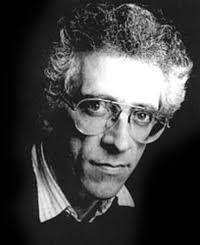
So what is horror at its core? According to the Penguin Book of Horror Stories, “The word horror derives from Latin horrere, ‘to make the hair stand on end, tremble, shudder.”[1] So, therefore, the subject matter is required to evoke emotion in us. But because the genre is so broad, it is impossible for the genre to be categorised under a single definition. Philosopher and sociologist, Tzvetan Todorov, suggested a way to classify the genre through its categories and subgenres: the uncanny, the marvellous and the fantastic.
The uncanny – “The end of the story contains elements of supernatural, events that seem to be unreal, impossible…or events that follow the laws of rational but are incredible, disturbing…or unique.”
The marvellous – “…seemingly irrational and incomprehensible phenomena can be explained only by accepting the second layer of reality – the supernatural while the story lasts…“the new laws of nature”. These include stories that feature vampires, werewolves and the living dead.
The fantastic – “Fantastic horror does not allow us clear explanations of the irrational; it offers us several alternatives. The viewer/reader can decide whether they will explain the phenomenon as the existence of the paranormal or as a hallucination of the main protagonist. The fantastic horror raises doubts and hesitation between the natural and supernatural alternative, which the recipient may (or may not) share with the character.”
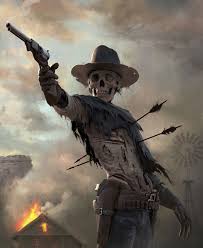
Other subcategories include: rural, cosmic, apocalyptic, crime, erotic, occult, psychological, visceral and surreal.[2] But there are so many other contemporary subgenres of horror, such as Western Horror/Weird West made popular by writers such as Cormac McCarthy and Richard Layman.
So why are we so drawn to horror? The enjoyment some people get from fear is likely not from fear itself but from “the physical and emotional release that follows scary situations,”[3] without actually having to put yourself in those dangerous situations. “But when the extreme sense of excitement wears off, it is replaced by an equally intense sense of relief, and those positive feelings are stronger than they would have been otherwise. A sense of mastery can also come from enduring a frightening situation and emerging triumphant.”[4] It acts as a ‘safety valve’, in which the exploration of the taboo in a safe environment releases built-up pressure. The hormones, such as adrenaline, which are released, as a result, is linked to a phenomenon known as “excitation transfer.” When scared, the body undergoes spikes in heart rate, breathing rate and muscle tension, among other involuntary responses. It taps into our natural, primal fight or flight responses and reassures us when the story ends that our lives are better than we thought when we started reading.

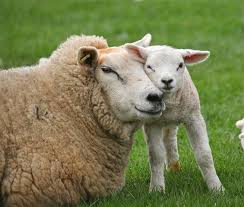
Therefore the purpose of horror is to explore our primal instincts in a civilised, law-abiding way. Almost as a tactic to keep humans ‘inline’ with civilised laws and behaviours. To release the tension caused by societal expectations and pressures. In some ways to demonstrate the dark side of the human psyche and act as a warning or a guide of what not to do. For example, in the short story, ‘The Shepherd’s Business’ by Stephen Gallagher, the sordid side of human nature is shown when a farmer cuts off his dead baby’s skin and places it over a different baby. This striking and harrowing visual image is so deeply upsetting and disturbing. But the most unsettling thing about this is that he fails to recognise that doing this to a human baby is depraved and disgusting, despite having good intentions. “In the few words he could manage John Petrie had told me how when a newborn lamb is rejected by its mother it can be given to a ewe who’s own lamb has died at birth. But first the shepherd must skin the dead lamb and pull its pelt over the living one. Then the new mother might accept it as her own. If the sheep understood the horror would be overwhelming… But screaming started from within the house, just as I was reaching the threshold.”[5]
In summary, I hope you have enjoyed this short exploration into the world of horror literature, dear reader. We’ve covered my personal experiences with the genre, we’ve looked at tips from the finest horror writers thee have been, we’ve delved into key horror locations and settings, and now we have covered the very nature of the genre. My blog series may be over, but Horror Fiction Addiction will always live on inside those that invite it into their souls. TTFN J
Bibliography
Cuddon, J.A. ‘The Penguin Book of Horror Stories’ (Godfrey Cave Associates Ltd, London, 1984), pg. 12
DNEWS, ‘Why is Fear Fun?’ published on Seeker.com in 2012 https://www.seeker.com/why-is-fear-fun-1766022662.html
Date accessed: 16/04/2020
Gallagher, S. ‘Shepherd’s Business’ IN: Morris, M, New Fears, (Titan Books, London, 2017), pg. 49
Todorov, T. (1973) The Fantastic: A Structural Approach to a Literary Concept. IN: Strinati, Dominic. (2000). An Introduction to Popular Culture. (Routledge, London), pg.83
Footnotes
[1] Cuddon, J. A, ‘The Penguin Book of Horror Stories’ pg. 12
[2] Todorov, T. (1973) The Fantastic: A Structural Approach to a Literary Concept. IN: Strinati, Dominic. (2000). An Introduction to Popular Culture. (Routledge, London), pg.83
[3] DNEWS ‘Why is Fear Fun?’ published on Seeker.com in 2012 https://www.seeker.com/why-is-fear-fun-1766022662.html
[4] DNEWS ‘Why is Fear Fun?’ published on Seeker.com 2012 https://www.seeker.com/why-is-fear-fun-1766022662.html
[5] Gallagher, S. ‘Shepherd’s Business’ IN: Morris, M, New Fears, (Titan Books, London, 2017) pg. 49

